
Two Different Measurements, Answering Two Different Questions
BMI and body fat percentage are often treated as competing measurements as if one is simply a more accurate replacement for the other. They're not competitors. They measure genuinely different things, and understanding that difference is what makes either number actually useful.
This guide covers what each measurement calculates, why they can produce contradictory-seeming pictures for the same person, the commonly cited healthy body fat ranges, and when each measure or the combination of both is the right tool for the question being asked.
The Core Difference Between BMI and Body Fat Percentage
BMI measures weight relative to height, a simple ratio applied the same way regardless of what that weight is actually made of. Body fat percentage measures something structurally different: the proportion of total body mass that is specifically fat tissue, as distinct from muscle, bone, and water.
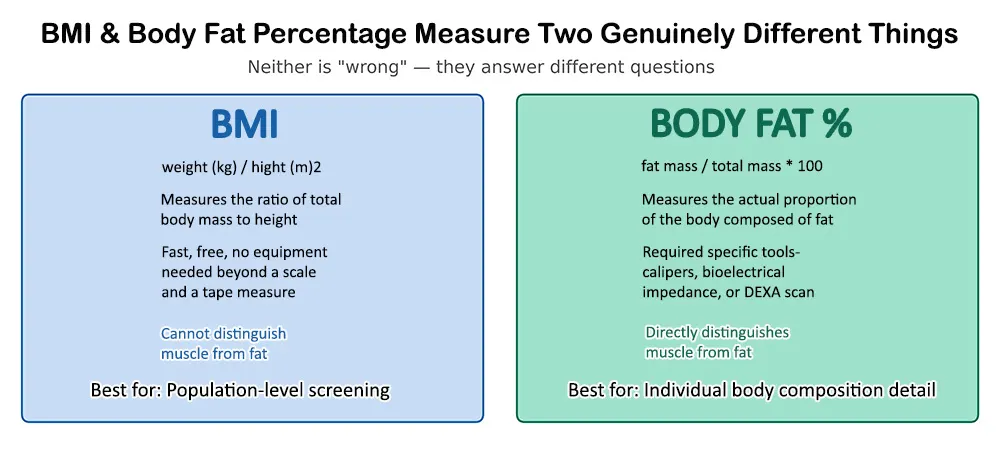
Figure 1: BMI and body fat percentage calculate different things using different methods. Neither is a flawed version of the other — they're built to answer different questions.
BMI's advantage is accessibility; it requires only height and weight, making it fast, free, and usable at population scale for research and general screening. Body fat percentage requires actual measurement tools: skinfold calipers, bioelectrical impedance scales, or a DEXA scan for clinical precision, but in exchange, it captures something BMI structurally cannot: what the body is actually made of.
Why the Same BMI Can Represent Very Different Bodies
The clearest way to see the gap between these two measurements is a commonly used illustrative comparison, not data pulled from any single specific study, but a widely cited example that demonstrates a well-documented pattern.
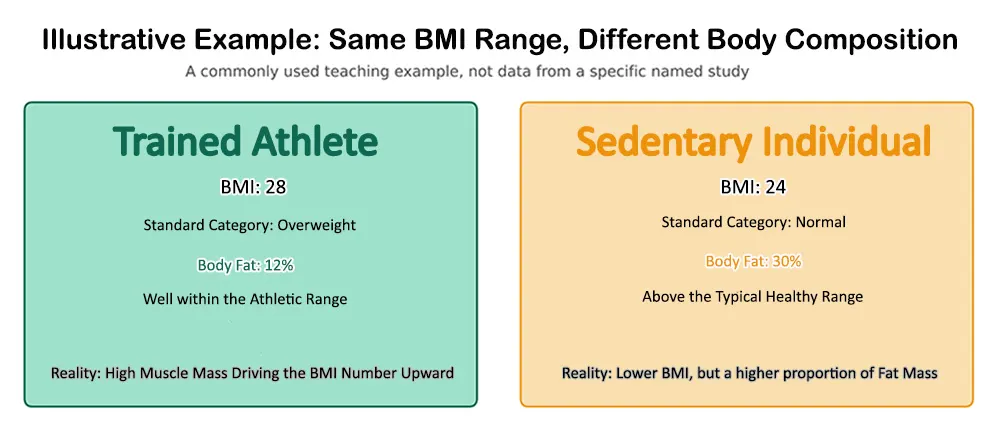
Figure 2: A trained athlete's BMI often falls in the standard 'overweight' range simply because muscle is denser than fat — while a sedentary person can register a 'normal' BMI while carrying a higher proportion of body fat. This is one of BMI's most consistently cited limitations, illustrated with representative rather than study-sourced figures.
This pattern is well-established in sports medicine and exercise physiology: BMI systematically tends to overestimate body fat in muscular, athletic individuals, and can underestimate it in people with lower muscle mass, because the formula has no mechanism for distinguishing between the two. Two people with an identical BMI can have meaningfully different health profiles once body composition is actually accounted for.
Healthy Body Fat Percentage Ranges
Unlike BMI, which uses a single set of category thresholds for all adults, healthy body fat ranges differ by sex, reflecting genuine, well-documented biological differences in typical body composition between men and women.
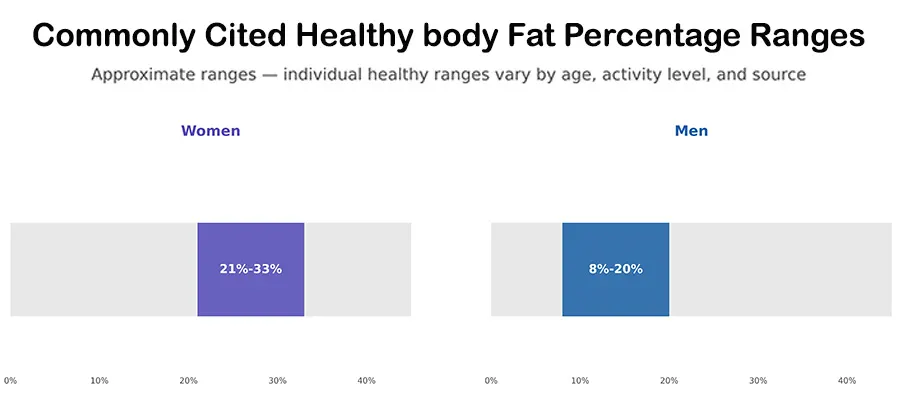
Figure 3: Commonly cited healthy body fat ranges. These are approximate — different organizations publish somewhat different figures, and individual healthy ranges shift with age, activity level, and genetics.
These sub-categories give more resolution than a single blended range, but the broader point holds either way: 'healthy' body fat percentage is not a single number, and where someone falls depends heavily on activity level and personal goals, not just a fixed target to hit.
Which Measurement Should Be Used
Neither measurement is simply 'more accurate' in every context; each is suited to a different purpose, and the honest answer to 'which should I trust' depends on what the question actually is.
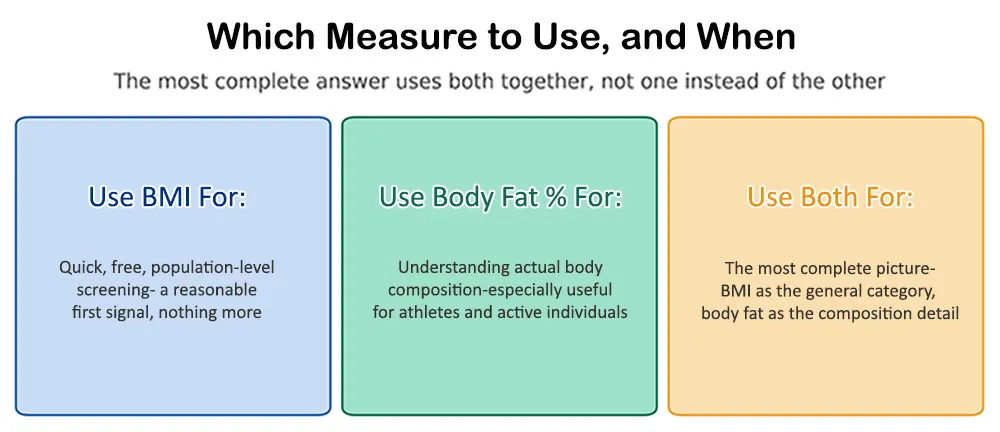
Figure 4: BMI and body fat percentage serve different practical purposes. The most complete picture comes from using both together rather than choosing one over the other.
BMI is well-suited for quick, free, population-level screening comparing large groups, tracking trends over time, or getting an initial, low-effort signal. It's not designed to be the final word on an individual's health.
Body fat percentage is well-suited for understanding actual body composition, particularly valuable for athletes, people engaged in strength training, or anyone whose BMI doesn't seem to reflect their actual fitness level. It requires more effort and, for clinical precision, specific equipment.
Combining both produces the most complete practical picture: BMI as a fast general category, body fat percentage as the composition detail that explains what's actually behind that category. Used together, they tell a more accurate story than either one does alone.
Frequently Asked Questions
Is body fat percentage more accurate than BMI?
It's more accurate for a specific purpose: understanding actual body composition. It's not universally 'more accurate' in every context; BMI remains useful precisely because it's fast, free, and effective at a population screening level, which body fat percentage measurement tools aren't as practical for at scale.
Why can an athlete have a high BMI but low body fat?
Because muscle tissue is denser than fat tissue, meaning a muscular person weighs more per unit of volume than someone with the same body size but less muscle. BMI only accounts for total weight relative to height, so it can't distinguish between weight from muscle and weight from fat, which is why athletes frequently register in the 'overweight' BMI category despite very low body fat.
What is a healthy body fat percentage?
Commonly cited ranges are approximately 21% to 33% for women and 8% to 20% for men, though these vary by source, age, and activity level. More detailed breakdowns exist for essential fat, athletic, fitness, and acceptable categories, which provide more nuance than a single blended range.
Can BMI and body fat percentage give contradictory results?
Yes, and this is one of the most instructive things about comparing them. A high BMI alongside low body fat typically indicates high muscle mass rather than excess fat. A normal BMI alongside elevated body fat can indicate lower muscle mass with a higher proportion of fat sometimes described informally as 'normal weight obesity.' Neither scenario is unusual, and both illustrate why relying on just one measurement can miss part of the picture.
How is body fat percentage actually measured?
Common methods include skinfold calipers (measuring fat thickness at specific body sites), bioelectrical impedance scales (which estimate body composition by passing a small electrical current through the body), and DEXA scans, which provide clinical-grade precision but require specialized equipment typically found in medical or research settings rather than at home.
Conclusion
BMI and body fat percentage aren't rival measurements competing for the title of 'more accurate.' They measure different things by design: one a simple weight-to-height ratio, the other an actual estimate of body composition, and each is genuinely useful within its own scope.
The clearest lesson from comparing them directly is that a single number, from either measurement, rarely tells a complete story on its own. An athlete's BMI can suggest 'overweight' while their body fat percentage tells a very different story. A sedentary person's BMI can look 'normal' while carrying more fat than that number implies. Neither measurement is lying; they're each answering a different, narrower question than 'is this person healthy.'
The most useful approach treats BMI as a fast first signal and body fat percentage as the detail that gives that signal actual context, used together, alongside a healthcare provider's broader assessment, rather than either one being asked to carry the full weight of the answer alone.